
Choosing which wheat or barley variety to plant is one of the most important decisions a grain producer makes each year, and the Washington State University (WSU) Extension Cereal Variety Testing Program (VTP) is a reliable tool Washington growers use to make that decision with confidence.
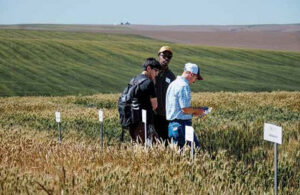
Selecting the right variety ensures that the crop is well-suited for the local climate, pests, and diseases. The right variety can maximize yield and, importantly, ensure that the grower is producing a crop that meets the buyers’ demands each year.
Here in Washington — where the large majority of our wheat crop is exported each year — it is critical that local growers can select a variety of wheat that meets the needs of our international markets.
In the Pacific Northwest (PNW), our world-class wheat brings in interested buyers from all over the world. Selecting a variety with good end-use quality ensures PNW wheat maintains a competitive advantage.
The WSU variety testing program
Meeting these global expectations requires more than good seed, it requires reliable, local performance data. This is where WSU’s VTP becomes indispensable. The mission of the VTP is to provide growers and the agribusiness industry with comprehensive information on the adaptation and performance of winter and spring wheat and barley varieties across the different climactic regions of Eastern Washington.
Washington growers rely on the VTP for objective and updated performance data when making wheat and barley variety selection. As explained by U.S. Department of Agriculture’s Agricultural Research Service researcher and club wheat breeder Kimberly Garland-Campbell, “The WSU VTP is the foundation for multiple projects funded through the Washington Grain Commission and the Washington Research Foundation, including the Preferred Variety Brochure, soil and plant samples for mineral and nutritional uptake, and resistance to environmental, disease, and insect stressors.”
Garland-Campbell also explains that, in addition to providing variety performance data for producers, the test plot data supports breeding programs by helping breeders make decisions about advancing experimental lines and provides Extension education opportunities. This ultimately leads to better performing, more profitable varieties being released to growers.
Program changes
While leadership changes have raised questions among growers, the changes have also created a unique opportunity to modernize and strengthen the program, ensuring it remains responsive, effective, and aligned with grower priorities while recognizing the long-term economic and operational realities.
In 2026 and 2027, Garland-Campbell and WSU spring wheat breeder Mike Pumphrey are skillfully leading the VTP through this transition, and their lead technical staff, Tricia Demacon and Vadim Jitkov, are serving as coordinators for winter and spring grain trials.
A full-time VTP manager — with a focus on Extension — will be hired and trained by this seasoned team. Hiring is a long process and selecting the right candidate is critical. The current plan is to onboard this new manager before the start of the 2027 spring season. The new coordinator will join the current dryland Extension team, Rachel Wieme, Morgan Menaker, and Aaron Esser, to conduct research and outreach that answers grower needs.
Plot tours
In 2026, 18 winter wheat locations and 10 spring wheat locations were planted.
Washington maintains one of the most robust testing programs in the nation. The VTP here sustains the most test plot locations nationally in order to represent the diversity and complexity of wheat and barley growing regions. This includes soft white, club, and hard red cultivars, as well as cultivars with herbicide-resistance traits.
All of the major plant breeding entities are represented in these variety trials; the program managers strive to analyze and send out preliminary harvest data to farmers within one week of harvest. Sign up for the prelim data mailing list by choosing the prelimdata list at https://lists.wsu.edu/join.php.
The total number of locations has been reduced from the maximum in 2024. The decision to reduce locations was made in consultation with farmers and seed suppliers to ensure the trials represent major production regions and to prioritize locations with consistently relevant data.
Variety testing funding
The WSU VTP is funded with grower dollars, with the goal always being to run a program that directly benefits growers. The time, energy, and manpower dedicated to creating a world-class variety testing program make Washington wheat more competitive and marketable on the global stage, ensuring that Washington growers always have a seat at the table.
Without reliable, locally validated data, growers risk planting varieties that underperform, fail to meet market standards, or miss premium pricing opportunities.
The variety testing leadership team actively welcomes grower input to ensure the program continues to meet real-world needs. Your feedback directly shapes goals and program priorities. Please contact the variety testing team through the small grains website or via email at [email protected].
This article originally appeared in the July 2026 issue of Wheat Life Magazine.
Maddison Dayton
Communications and Content Manager, Washington Grain Commission