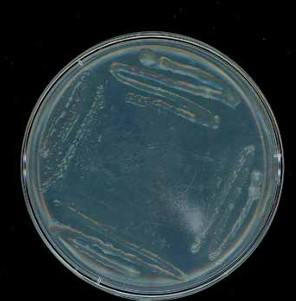
dilution plates used to procure bacteria in Friesen and James’ research
Friesen, associate professor in Washington State University’s (WSU) Department of Crop and Soil Sciences, and Vincent James, Ph.D. candidate in molecular plant sciences at WSU, will begin their work on creating a practical, sustainable alternative to synthetic fertilizers this month.
Crop productivity relies on nitrogen as an essential nutrient for plant growth. Even though nitrogen gas makes up about 78% of the air, plants cannot use it directly. Instead, they rely on a process called nitrogen fixation, where nitrogen is converted into forms plants can absorb.
Farmers in Washington, especially wheat producers, currently depend on synthetic nitrogen fertilizers. These fertilizers work quickly and are easy for plants to use, but they come with potential drawbacks. They are expensive, and their cost can fluctuate because they rely on fossil fuels. Overuse has also caused soil acidification, which reduces crop yields and can lead to problems like aluminum toxicity. Additionally, plants do not absorb all the applied nitrogen.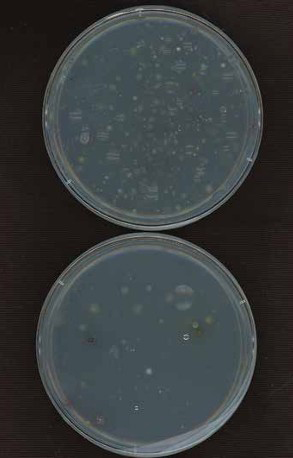
Because of these issues, scientists are exploring alternatives such as biological nitrogen fixation, performed by specialized bacteria. These bacteria can convert nitrogen gas into usable nutrients for plants. Some plants, like legumes, naturally partner with these bacteria in structures called root nodules, small growths on roots where bacteria are protected and supplied with energy by the plant. In return, the bacteria provide nitrogen. However, crops like wheat do not form these nodules, so bacteria must live more loosely around their roots where conditions are less ideal and competition is high.
There has been growing interest in biofertilizers, products that contain beneficial bacteria to improve plant growth. While they can sometimes boost yields, their results are inconsistent.
To address these challenges, Friesen and James’s project proposes to study new ways of harnessing nitrogen fixing bacteria for use in nonlegumes, like wheat. There are three key aspects to the research.
First, scientists will identify and test local nitrogen fixing bacteria from soil and wheat roots. They will look for the presence of a key gene called nifH, which is part of the enzyme nitrogenase that enables nitrogen fixation. Second, they will look at ways of providing the correct environment for these bacteria to fix nitrogen, which requires low oxygen and high carbon. Finally, they will explore how wheat roots and these nitrogen-fixing bacteria can be encouraged to interact with one another. If successful, this system could lead to a commercial product that improves wheat production while reducing environmental impacts and reliance on fossil fuels.
The potential benefits to farmers and to society are significant. Nitrogen fertilizer currently accounts for 20-35% of farmers’ costs, and much of it is wasted. A system that delivers a steady, low dose of biologically fixed nitrogen could reduce costs, improve soil health, and lower environmental impacts. It could also reduce the need for additional inputs like lime, which farmers use to counteract the soil acidity that occurs due to applications of synthetic nitrogen fertilizer. Overall, efforts by WSU and others to enhance biological nitrogen fixation could help usher in the second Green Revolution.
Also this month, the WGC will begin funding work on heat wave-resilient wheat by Smertenko, an associate professor in molecular plant sciences at WSU. Smertenko’s proposal outlined a goal of establishing a standardized framework to help scientists and farmers identify wheat varieties that perform well under heat stress.
Heat waves, especially when they occur in late spring or early summer during flowering, are becoming more of a problem for wheat production in Washington. Flowering is a critical stage when the plant reproduces, and high temperatures can interfere with this process, ultimately reducing grain yield. These effects are even worse when heat waves happen at the same time as drought.
Growers sometimes try to avoid heat damage by planting crops earlier, but this strategy is becoming less effective as weather patterns become more unpredictable, and heat waves happen earlier in the season. As changes in the climate increase the frequency and severity of heat and drought, it is important to understand the risks and develop varieties of wheat that are more tolerant of the stress brought by heat waves.
Wheat reproduction is particularly sensitive to heat stress, but current methods of evaluating crop performance mainly focus on the final yield at harvest. This approach misses important details about how stress affects different parts of the plant during development.
A wheat floret contains both male and female structures. The male part, called the stamen, produces pollen, while the female part, called the gynoecium, contains the ovary where seeds develop. These structures go through several stages, including meiosis, a type of cell division that produces reproductive cells, pollination, fertilization, and seed development.
Heat and drought can affect all these stages, but meiosis, anthesis, and the first two weeks of seed growth are particularly vulnerable. Because each stage depends on the previous one, damage early on can reduce the final yield. Currently, there are no widely used methods to evaluate how each stage responds to stress separately.
To address this gap, researchers have previously conducted greenhouse experiments to test how heat and drought affect different reproductive stages in wheat. They grew three varieties of spring wheat and planted them in a staggered schedule so that different plants were at different developmental stages at the same time. The plants were exposed to drought and then briefly heated to 42°C (107°F). Scientists examined the plants’ reproductive structures using fluorescence microscopy. They also measured how much yield was lost compared to unstressed plants. The results showed that different wheat varieties had different levels of tolerance at different stages. These results demonstrate that it is possible to identify varieties that are more resistant to heat stress by studying each reproductive stage carefully.
The overall goal of Smertenko’s research is to create a reliable system for evaluating and certifying how well wheat varieties can tolerate heat waves. This involves developing consistent testing methods and applying them to a wide range of wheat varieties from breeding programs. Smertenko also plans to establish field experiments where heat stress is applied in controlled conditions using specialized enclosures and heaters. The test is designed to monitor temperature closely and test plants at key developmental stages. The impact of stress will be measured using factors like grain number, grain weight, and the presence of damaged kernels. Statistical methods will be used to compare results across different varieties and stages.
The expected outcome is a standardized framework that helps scientists and farmers identify wheat varieties that perform well under heat stress. The project will also classify varieties based on their tolerance using a simple certification system: one star for tolerance at one stage, two stars for two stages, and three stars for tolerance at all key stages. Varieties with three-star certification are expected to maintain stable yields even when heat waves
occur at different times.
In the long term, using heat-tolerant wheat varieties will help reduce crop losses and improve stability in food production despite increasingly variable climate conditions.