 As we reflect on 2025/26, Washington grain growers continue to face significant challenges, with low commodity prices and high input costs putting pressure on farm families. The Washington Grain Commission (WGC) recognizes that every assessment dollar comes directly from growers and remains committed to investing those funds responsibly, transparently, and with a clear purpose.
This year marked the first full year under WGC’s refreshed strategic plan, which established measurable goals across market development, research, education, and organizational success. The theme of this report, Your Dollars at Work, reflects our commitment to show growers how assessment dollars are invested, leveraged, and turned into results.
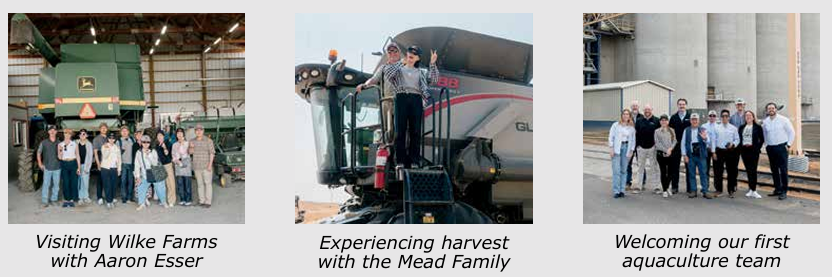
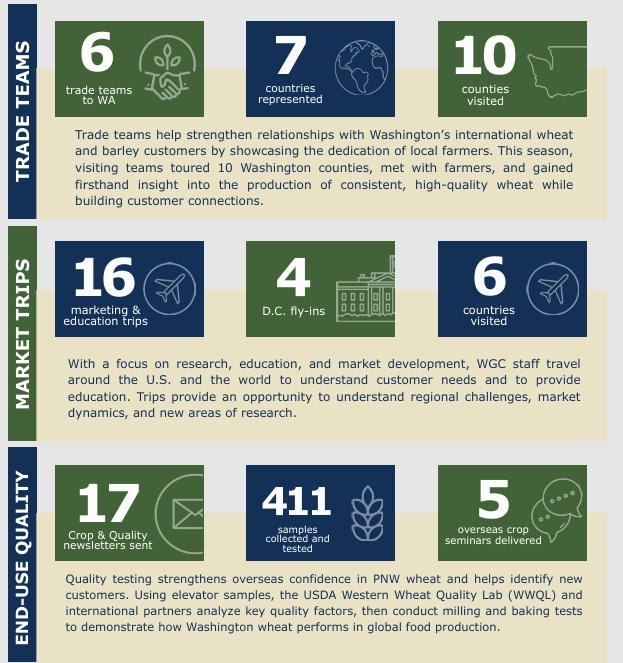
As directed by growers, strengthening demand remained a top priority this year. WGC engaged customers from more than 10 countries, explored new and higher-value uses for soft white wheat, advanced opportunities in aquaculture feed markets, and launched a noodle wheat exchange program in Korea. Through support from U.S. Wheat Associates and hosting six inbound trade teams, we continued building relationships that support long-term market growth. We also introduced the Crop and Quality Monitor, which provides customers with timely information and reinforces Washington’s reputation as a reliable supplier.
Research remains essential to grower profitability. WGC invested more than $2 million in research projects and expanded grower involvement through a new Research Advisory Subcommittee. We also helped support WSU’s successful effort to secure $10 million in additional agricultural research funding, demonstrating how grower assessments can leverage much larger investments.
Through partnerships with researchers, customers, industry organizations, and fellow Pacific Northwest commissions, WGC extends the impact of every assessment dollar. While the economic challenges facing agriculture remain significant, we are committed to staying focused, accountable, and aggressive in creating opportunities for Washington wheat and barley. These are your dollars at work, and we remain committed to earning your trust.
Casey J. Chumrau, CEO
The Korean Noodle Wheat Exchange is a collaborative program involving the Washington Grain Commission (WGC), U.S. Wheat Associates (USW), USDA/ARS, and Korean milling partners, established to evaluate wheat quality and performance for noodle applications. The program focuses on comparing Washington-grown wheat with the Australian wheat commonly used in the Korean market. Through coordinated sample exchanges and laboratory testing, the project aims to provide technical data on flour quality to help breeders set targets for future wheat lines and ultimately enable Washington Wheat to be competitive in the Korean Noodle Market.
The program is currently in the initial testing and evaluation stage. Korean mills received a sample of SW Butch CL+ wheat in early July and are analyzing its quality characteristics in comparison with Australian Standard White (ASW) wheat, using a Wheat Quality Council style evaluation.
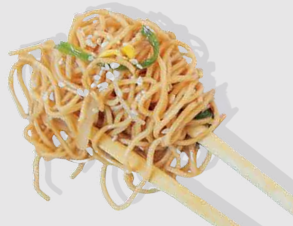 At the same time, USDA/ARS is expected to test the Australian ASW sample provided by USW/Seoul for noodle applications. Once testing and analysis are completed on both sides, WGC, USW, USDA/ARS, and the Korean partners will review and compare the results and determine appropriate next steps for the program.