
The Philippines remains a textbook example of how quality and technical performance drive loyalty. At a leading cracker manufacturer, the team toured a high-volume, world-class operation that relies on consistent flour functionality to achieve exacting textures in layered crackers and grahams, utilizing five to six bulk flour trucks per day. The message was straightforward: for products where bite, layering, and “clean” labels matter, SW is the wheat they count on. Gardenia, the country’s dominant retail bread brand, underscored the same quality-driven mindset for their white, wheat, and sweet breads. With multiple breadlines capable of thousands of loaves per hour, Gardenia’s scale is immense, and their stakes are high, given short shelf life and strict pull-back policies.
In short, when performance is non-negotiable, quality wins, and for Filipino millers and bakers, that almost always makes U.S. wheat their top choice.
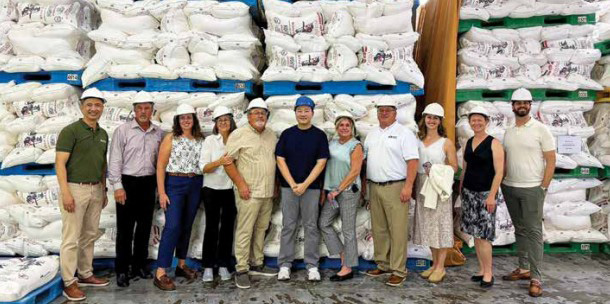
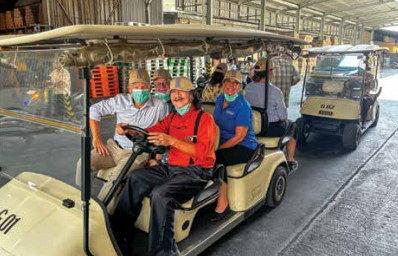
Indonesia tells a different story, one where price and proximity dominate, yet targeted engagement can open doors. Currently, Australia’s location advantage and Canada’s fit for hand-mixed doughs give them outsized Indonesian shares. Coming off three supply-challenged years, U.S. wheat market share has dropped to only 5% of Indonesia’s wheat imports. Nevertheless, the country maintained its position as a top 10 U.S. wheat export market. SW has one of the strongest positions in Indonesia because several manufacturers prefer it, contracting flour specifications for high-end cookies and crackers that can only be met with SW flour. Hard wheats continue to face a challenge as many bakeries are still small and mix by hand, favoring the shorter mixing times and higher water absorption provided by Canadian wheat. As operations modernize and mechanize, consistency and mixing tolerances begin to matter more — areas where U.S. wheat shines. That dynamic represents a medium-term opportunity for U.S. wheat classes and technical support and training by USW.
Engagements with APTINDO (the Indonesian flour millers’ association) and leading companies, such as Bogasari, Holland Bakery, and a leading cookie and cracker manufacturer, reinforced the role of technical education. Short courses and baking schools offered by USW show measurable impact, helping customers optimize flour blends and adopt objective tools like Solvent Retention Capacity (SRC) to specify performance. Notably, several Indonesian operations have incorporated SRC into their quality parameters, a favorable signal for SW’s functional value proposition. Large manufacturers emphasized performance that is consistent on their equipment and shipment-to-shipment, exactly the kind of standardization U.S. suppliers are positioned to deliver.
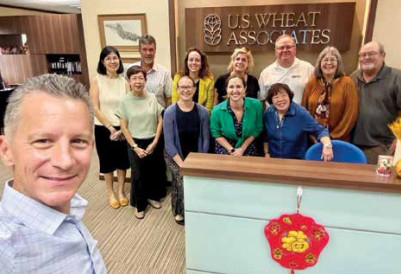
Another promising development is the U.S.–Indonesia Memorandum of Understanding (MOU) signed between the U.S. wheat industry and Indonesian millers to bolster the Indonesian government’s position in recent tariff negotiations. Indonesian shipments in 2025 have far exceeded their pledged level of 800,000 metric tons, and the PNW team assured millers of their continued support for the industry meeting the agreed purchase commitment of 1 million metric tons annually from 2026 to 2030. A strong PNW presence, through plant tours, lab visits, and hands-on training, will be key to translating the MOU into tangible results. These efforts can help turn sporadic purchases into consistent, long-term business, while creating opportunities for technical collaboration to flourish.
On pricing and logistics, Indonesian millers emphasized that U.S. wheat often lands at higher prices than competing origins, and storage realities (bagged inventory, pest pressure) can complicate quality management. While geography cannot be changed, exporters in the PNW can lean into predictability, transparent logistics, and blending guidance that helps mills hit specifications without waste.
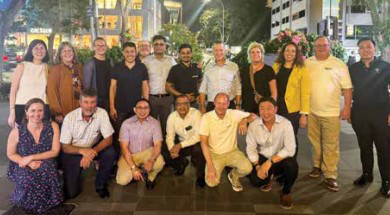
When it comes to dough handling, SW’s low-protein, low-ash attributes help produce world-class crackers and cookies, yet some mills report “stickiness” under certain conditions. Those issues are solvable; targeted moisture control, process adjustments, and blend tweaks coached by USW and technical partners keep SW performing and reduce scrap. Procurement standards are also evolving, with more buyers requesting sustainability and non-GMO certificates to preserve export options for finished goods. Coordinating with USW on streamlined documentation and clear talking points will help buyers meet downstream requirements without added burden.
Tariffs and policy shifts remain persistent wild cards. But despite this uncertainty, wheat organizations are holding steady to their core commitments: finding new market opportunities for U.S. wheat and helping our global customers meet their business needs. The most durable case for SW anchors in plant-floor performance — objective measures like SRC that correlate with desired textures and yields — so the value proposition endures bouts of tariff or freight volatility.
The tri-state format works. The joint presence of Washington, Oregon, and Idaho signals unity among suppliers that leads to reliability for customers. Because soft white is grown in all three states, the delegation can hear the same feedback on quality and performance from overseas bakers, millers, and procurement teams. Additionally, all three commissions are members of USW, which helps represent PNW growers in these overseas markets. This coordination ensures the feedback customers tell USW in-country is delivered to the farmers, researchers, and marketers who can act on it.

This trade mission underscored that SW’s advantage is the direct result of our growers’ commitment to planting varieties with desirable end-use quality that result in the crackers, cookies, wafers, and breads enjoyed across Southeast Asia. On-farm commitment is one of the factors overseas customers notice, and that makes PNW SW difficult to substitute. The task for the Pacific Northwest industry is to keep showing up, keep solving, and keep proving why SW from the PNW is the dependable choice when product texture, process efficiency, and brand loyalty are on the line. Where mills and bakeries measure what matters, PNW SW earns its place.