
Maintaining grain soundness and end-use quality is essential for domestic and international grain markets. Grain soundness refers to the physical integrity and maturity of harvested grain, while end-use quality describes how well that grain performs in finished food products.
In the Pacific Northwest (PNW), grain soundness underpins the global reputation of the region’s soft white wheat industry. The phrase “quality is king” accurately captures the priorities of this market. Grain that meets strict standards is exported primarily to Asian markets and used to produce high-quality cakes, noodles, and other specialty products. Maintaining industry standards has helped the PNW build a reputation that keeps international buyers returning year after year. Yet an exclusive focus on quality can overlook another important dimension of grain production: nutrition. Refined white wheat, the foundation of many food products, provides energy but contains fewer nutrients than whole-grain alternatives. Through funding provided by the Washington Research Foundation BioInnovation Grant, researchers in Washington state and across the U.S. are exploring ways to improve the nutritional profile, affordability, and accessibility of wheat and other grain-based foods. These efforts include expanding the use of whole wheat and evaluating alternative grains with superior nutritional characteristics. One crop receiving growing attention is quinoa.
Quinoa has gained global recognition for its exceptional nutritional value and resilience to environmental stresses such as frost, drought, and salinity. As a result, quinoa cultivation has expanded dramatically from just eight countries in 1980 to more than 125 today.
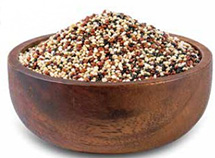 Despite their nutritional advantages, both whole wheat and quinoa must meet the same fundamental requirement as traditional wheat products: high grain soundness and quality. Grain that loses soundness produces inferior food products, often resulting in baked goods with poor rise, undesirable texture, and reduced nutritional value. Unsound grain can also disrupt industrial processing in mills, bakeries, and breweries, and in severe cases, lead to significant economic losses for growers and processors.
Under certain environmental conditions, both wheat and quinoa are vulnerable to a physiological problem that directly threatens grain soundness: preharvest sprouting (PHS). PHS occurs when mature seeds begin to germinate before harvest, typically following rainfall or prolonged humidity. This can happen in seeds that lack strong dormancy, as in quinoa, or after dormancy has naturally declined, as in wheat.
For growers in the Pacific Northwest, the difference between premium export grain and substantial economic loss can depend on a narrow window at the end of the growing season when grain must remain sound until harvest.
During germination, seeds activate metabolic pathways that mobilize stored reserves for seedling growth. A key enzyme in this process is alpha-amylase, which breaks down starch stored in the seed’s endosperm into sugars that fuel early seedling development.
While essential for plant growth, premature activation of this process degrades starch reserves in harvested grain and significantly reduces grain quality and end-use performance.
Managing PHS remains challenging because once dormancy is lost and favorable moisture conditions occur, sprouting cannot be fully prevented. The problem is further complicated by incipient sprouting — early biochemical changes that degrade grain quality before visible sprouts appear. At this stage, grain quality may already be compromised even though sprouting is not yet visible. Global economic losses associated with PHS are estimated to approach $1 billion annually.

Quinoa is particularly vulnerable to PHS. Unlike wheat, quinoa seeds lack protective structures such as glumes that shield grain from environmental moisture. Quinoa also exhibits weaker seed dormancy than most modern wheat varieties, allowing sprouting to occur more readily under wet conditions. As a result, PHS damage in quinoa can develop quickly and become severe (Figure 1).
The consequences can be substantial. Sprouted quinoa seeds become brittle, lose weight, and often detach during mechanical harvest, leading to potential yield losses. Sprouted grain may also exhibit higher respiration rates and moisture content, increasing the risk of mold growth and heating during storage.
Because complete prevention is difficult, current management strategies focus primarily on reducing risk. For wheat, growers are encouraged to plant varieties with improved tolerance to PHS. Comparable varieties remain limited for quinoa. All growers can also reduce risk by closely monitoring crop maturity and harvesting grain before forecast precipitation events when possible.
In wheat, grain elevators and export facilities often evaluate starch damage using tests such as the falling numbers test. In some cases, blending strategies may be used to maintain acceptable quality thresholds. Similar approaches may eventually prove useful for quinoa if varieties with more moderate responses to sprouting can be developed.
However, improving PHS tolerance through breeding presents a fundamental biological challenge. The same mechanisms that regulate seed dormancy and sprouting in the field also control germination after planting. Breeding programs must therefore balance improved tolerance to preharvest sprouting with the need for rapid and uniform crop establishment, a difficult but essential goal.

Researchers across the Pacific Northwest are working to better understand the biological mechanisms underlying preharvest sprouting and to develop more effective strategies for managing its impact (Figure 2).
In wheat, studies have focused on identifying genetic markers associated with PHS tolerance that can support plant breeding programs. More recently, research has expanded to examine differences in protein expression between sprouted and sound seeds across multiple wheat cultivars. Comparative protein profiling, known as proteomics, offers new opportunities to identify proteins involved in sprouting and may reveal molecular targets for improving tolerance. Established methods for studying PHS in wheat may also serve as valuable translational tools for investigating sprouting in quinoa.
Research on PHS in quinoa remains in its early stages. Current efforts focus largely on identifying tolerant varieties and improving management strategies. Studies conducted at Washington State University have already identified certain quinoa varieties, particularly those adapted to higher latitudes, that show improved tolerance to adverse weather conditions that lead to preharvest sprouting.
Breeding programs are also exploring strategies to better regulate seed dormancy. One promising approach involves developing quinoa varieties that remain dormant under the high-humidity conditions associated with preharvest rainfall, but lose that dormancy once seeds are harvested, dried, and stored. Researchers are also developing screening methods to identify agronomically important traits associated with PHS tolerance in quinoa, providing valuable tools for
future breeding efforts.